
How to Practice Internship Interview English With AI Before You Study Abroad in 2026
Last updated on
If you are heading into a study abroad program, a global internship, or a combined study-and-work placement this year, internship interview English practice is not optional. It is the part that decides whether your preparation turns into an actual opportunity.
That sounds dramatic, but look at the shape of the moment. Major program providers like CEA CAPA are actively promoting 2026 study abroad and global internship pathways, the Open Doors annual release keeps reminding institutions how central international education has become, and practical visa questions still hit students late in the process, as outlined in GoAbroad’s updated guide to study abroad visa requirements. In plain English, more people are chasing international experiences, and the ones who can actually speak clearly under pressure have an edge.
The trap is obvious. Students spend weeks polishing CVs, collecting documents, and researching host cities, then treat speaking like it will magically sort itself out on interview day. That is how you wind up knowing the answer in your head and freezing halfway through the first question.
If that sounds familiar, you are not broken. You just need better rehearsal.
What internship interview English practice really needs to train
Most learners think interview English means memorizing fancy vocabulary. That is backwards. Interviewers are usually listening for four things:
- Can you answer clearly without rambling?
- Can you explain your experience in a logical order?
- Can you recover when you do not know the perfect word?
- Can you sound calm, professional, and engaged?
That lines up with general interview guidance from Harvard’s interview prep resources, which emphasize preparation, clarity, fit, and communication. None of that requires you to sound like a native speaker. It requires you to sound prepared.
That is why generic grammar drills do not carry the load. You need spoken repetition around the exact situations that show up in internship interviews: introducing yourself, describing projects, explaining why you want the role, answering behavioral questions, and asking smart follow-up questions.
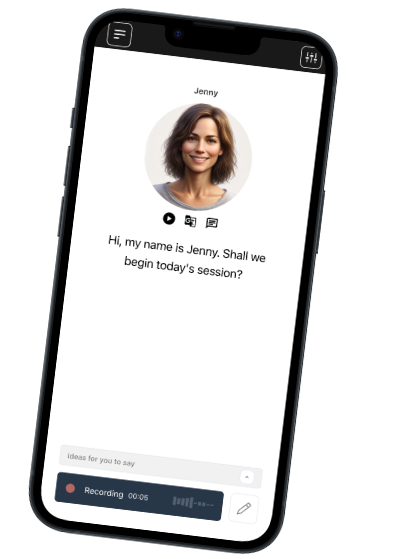
This is also why Talkio works well here. Instead of passively reading model answers, you can rehearse them out loud, get used to the pressure of a real conversational turn, and practice until the words stop feeling borrowed. That is the whole game.
Why AI roleplay is a better fit than memorizing scripts
Memorized answers feel safe right up until the interviewer changes one word. Then the whole thing falls apart.
Good internship interview English practice should feel more like sparring than recitation. You want repeated exposure to slightly different versions of the same challenge:
- “Tell me about yourself” with a formal interviewer
- “Why do you want this internship?” with a friendly recruiter
- “Describe a time you solved a problem” with a fast-paced manager
- “What are your strengths and weaknesses?” when you are already nervous
That is where AI conversation practice earns its keep. You can run the same scenario ten times, change the tone, raise the difficulty, and keep going until your answers sound like you, not like a script you are dragging uphill.
If you have already read our guide on how to ace a job interview in your second language, think of this article as the study-abroad version. The stakes are slightly different. Internship interviews often test potential, adaptability, and motivation more than deep career history. That makes your delivery matter even more.
A five-session plan for internship interview English practice
Here is the cleanest way to do this without overcomplicating it.
Session 1: Build your core story
Record short answers to the basics: who you are, what you study, what you have worked on, and why this internship fits your goals. Keep each answer under 60 seconds at first. Long answers are usually hiding weak structure.
If you struggle here, read our post on conversation rehearsal for high-stakes talks. Same principle, different setting.
Session 2: Practice common interview questions out loud
Do not write full scripts. Write bullet points. Then answer questions live with an AI speaking partner. Force yourself to explain a class project, a team conflict, a deadline, and a moment where you learned from a mistake.
This matters because internship interviewers love evidence. They do not want vague claims like “I am hardworking.” They want one short story that proves it.
Session 3: Train recovery language
This is the underrated part. You need phrases for the moments when your brain stalls:
- “Let me think for a second.”
- “A better way to say it is…”
- “I have not done that exact task yet, but in a similar project I…”
- “I would approach that in three steps.”
These phrases buy time and keep you sounding composed. They are much more useful than chasing perfect grammar on every sentence.
Session 4: Simulate the actual pressure
Run a full mock interview with stricter pacing. No pausing to rewrite. No reading notes. No restarting every time you stumble. You need to feel the pressure now, not for the first time on interview day.
That is also where fear management matters. Our piece on making mistakes without panic is worth revisiting before this round.
Session 5: Adapt to the internship context
Finally, customize your practice for the actual program. A hospitality internship, a lab placement, and a marketing role will all push different vocabulary and examples. If your placement includes presentations, pair this routine with our advice on presenting in a language you are still learning.
What to say when your English is good, but your confidence is trash
A lot of applicants do not have a language problem. They have a speed problem. They can understand everything, but they need a little too long to organize an answer, and that delay feels awful.
The fix is not more passive study. The fix is timed speaking reps.
Use Talkio to practice answering under a soft constraint, 30 seconds, 60 seconds, 90 seconds. Do the same question at different lengths. It teaches you how to prioritize ideas fast, which is exactly what real interviews demand.
This is especially useful if you are moving toward a placement where communication is part of the job. We made that broader case in our article on AI language apps and professional skill development, and internship interviews are one of the clearest examples.
The best way to use Talkio for internship interview English practice
Keep it simple. Create a roleplay where the AI acts like an internship interviewer, give it your field, your target country, and the tone you expect, then start answering out loud. Ask for follow-up questions. Ask it to challenge weak answers. Ask it to switch from friendly to formal. That is how you build range.
The point is not to sound flawless. The point is to sound credible, thoughtful, and ready to work with other people.
So if your interview is coming up and you are still mostly reading notes in silence, cut that out. Start doing real internship interview English practice now. A decent answer in your head is worth nothing. A clear answer that comes out of your mouth on time, that is what gets you through the door.
Talk Your Way
to Fluency
Talkio is the ultimate language training app that uses AI technology to help you improve your oral language skills!
Try Talkio